Search This Blog

Showing posts with label all authors magazine. Show all posts

Friday, July 8, 2016

Coffee Time Author Interviews

Attention Authors!


Are you in need of free book promotion?

Would you like to be featured in All Authors Magazine? 

All Authors Magazine is open for submissions for Coffee Time Authors Interviews. If you would like to be interviewed for an upcoming issue, please send your queries to admin@allauthorspp.net.


Friday, December 4, 2015

Friday Rewind: The Resurgence of Quality


Dear Readers, Writers, and Precious Patrons,

Today on All Authors Friday Rewind we bring you The Resurgence of Quality, an interview with the creator behind Koobug from Issue 3 of All Authors Magazine.


The Resurgence of Quality

During an interview with a fellow author, I was told about a site called Koobug.  His suggestion lingered long after our interview time had concluded, so I took it upon myself to visit the website.  There was a simplistic beauty in presentation with a candor of quality and enthusiastic participation that made me want to know more about this treasure.  To my delight, I was granted the opportunity to talk with the creative minds behind Koobug to get their take on why it is a welcomed wind of change in an environment saturated with practices that dilute the writer and reader experiences.


1.  Where did the name Koobug originate?

We wanted to choose a name for Koobug that didn't have an obvious sound association to anything else because we wanted Koobug to have its own identity. That was the starting point. For various reasons we couldn’t use our original idea and that concept evolved into Koobug.

2. Tell us about the creative forces behind Koobug.  What factors played a role in your deciding to establish this website?

The idea behind Koobug came from writers. The Koobug team are all writers, some published through traditional means, others self-published and some still writing their first books. We wanted to build a site that would genuinely provide support for authors in the areas that they need it. The modern world of writing means that anyone can write and self-publish. Two key difficulties for the self-published, that have yet to be resolved properly, are the problems people have in getting their writing seen – most authors lack the marketing budget that traditional publishers would spend for them, and there is also no 'quality control' over what is good and what is not. It is that lack of quality control that puts many people off buying 'indie' books. We wanted Koobug to put everyone on the same footing when their books start on the site – leveling the playing field. Central to the site is the ability for good books to be identified and be seen, so that readers that come to Koobug.com can find books that have been supported and recommended by others.

It is our clear intent to open a bookstore here on Koobug where authors can market and sell their creations. Other commercial developments will follow. Koobug will endeavor to give the author a much greater degree of financial control by asking for a fairer balance between our commission and the royalties received. One of our Koobloggers recently described it as a “Fairtrade principle”. In the UK this is where a commercial organization deals with third world farmers and companies on an equitable basis. They give the third world a fairer and more respectful deal, whilst still making a profit. The element of greed is banished.

3. The look of the Koobug site is clean, yet simplistic.  The black and white reminds me of typewritten letters against a sheet of paper-with the red being utilized for emphasis.  Was this theme chosen on purpose, and if so, why?

You have it. We wanted clean and simple. We wanted to show off the books and to let their authors be discovered by readers.

4. Do you ever get pressure to implement other elements to Koobug, such as a “blog editor,” “storage capability for pictures of book covers”, or “Koobug messenger”?  How do you respond to people who want these features, and will they be part of Koobug in the future?

We have had requests for all sorts of additions to the site. We love to hear from users, because we have built the site for authors and readers to use and we want to hear from you. We want authors and readers alike to appreciate that Koobug is receptive to creative and constructive ideas. However, we are a small team that are not backed by big investors, and our priority at the moment is to build in the key features that we think are essential to the site. Once those are in place we will keep looking to improve Koobug.com. Underlying all changes will be our constant effort to find better ways for good writing to be discovered.

We see ourselves as the next stage in the evolution of the independent bookstore. It is important to us to foster a community based upon talent and integrity. We do not possess vast resources and the success of Koobug is directly proportionate to the support we receive.

5. How did Koobug come up with the concept of multiple classifications for books?  How does it differ from what other sites are offering?

The idea behind our classification/search system is to allow authors to have a far wider discretion in how they choose to portray their work. One of the great things about the new literary world is that people are able to write niche books that are available on a global market. We want that to be reflected in our site and the way that people find books on our site. We also want it to be easy for readers to use, so that they can discover books that they find interesting, in a more intuitive way. We are sure that we will need to put a lot more effort into getting this right, but we see it as a central part of the site.

6. Tell us about the development of the Koobug book reader apps and software.  How will it be more beneficial than the other apps and software currently available to authors?

This is something that we devote a lot of time to within the team. Our ambition is to do something quite strikingly different, which rapidly engages readers from around the world with the creative content on the site. We are working on this “as we speak”, but we will not launch anything until it meets our standards, and so we are keeping it under wraps at the moment... we are all pretty excited by the idea though, and we think that the regular contributors to the site will love it too.

7. I have enjoyed the reviews and interviews you have done for Beem Week’s Jazz Baby and Sarah Michelle Lynch’s A Fine Profession.   Can we anticipate seeing more interviews and reviews?  If so, how often and what is the criteria in regards of how you select people to review and interview?

Reviews and Interviews are an important part of Koobug. We really enjoy interviewing authors, and yes, there will be more of them. It will become a regular feature of the site. Indeed our next interview of the indie author LK Jay will be going live very soon. We spent a lot of time “reviewing” interviews on other sites. They left us unimpressed and underwhelmed. It was clear to us that if we adopted this concept we wanted to make our interviews stand out. They needed to have the tone and quality of a premiere publication. Our first principle was integrity. We don’t create interviews at the request of others, or in exchange for anything. That having been said they are to promote Koobug writers.  We select people that we have noticed on the site and whom we think will be interesting to interview. This is best demonstrated by the Kooblogs. We read them all (I wonder if other sites do the same? ). We are forming a relationship with each of our contributors individually and collectively. Our creative director crafts the interviews and tailors them to the specific subject.. We read examples of the authors' work and take time to understand the world of the particular author we feature. Koobug takes a lot of care in the process because we want our interviews to gain respect and value. They have been well received. We hope more and more people will read them and enjoy them.

8. Why does Koobug opt not to use stars as part of the rating process?

Koobug was not created in the image of other sites. The 5 star system is an illusion. It is open to manipulation and lacks credibility. These facts are widely known. At the heart of Koobug is the idea that we want people to be positive. The creative process should reflect that. We have a system where you can vote for a book that you like, those that get the most votes become a 'top Koobug book' and are profiled on the front page. No payment, no putting other people down to stand out – just good books being supported by people who read them, and then being seen. We think it works.

9. Describe what a reader’s experience will be like upon entering the Koobug website.

We hope that readers will discover a wealth of interesting and good books that they might not have seen on Amazon or in their high street bookstore.  As we've already said we want visiting our site to be like a visit into a good independent bookstore – the sort that are becoming increasingly hard to find in the high street both in the UK and the US. We also want to let readers engage with the authors, through blogging and commenting on books. Koobug.com offers any good writer the chance to meet with their audience and vice-versa. This is not unique to Koobug, but what distinguishes Koobug from the rest is the sense of community or family that we have engendered with those who have joined us.

The Kooblog is at the heart of our site. Anyone who has charted the explosion in its popularity and influence will appreciate that Koobug.com is a site on the move, and a site that listens to its contributors. We can’t respond to every individual whim or idea, but the site is about enjoyment and enrichment.

Koobug is not prescriptive, we encourage and promote poetry and short stories and they will feature prominently in future developments. We see no reason why writers with scripts for film or TV  shouldn’t also see value in the opportunities offered by Koobug.

Above all we want everyone to have fun and fulfillment out of this site.

10. Koobug has a very strong UK following.  What would you say to authors from other places, particular the United States, as to why it would benefit them to have Koobug as part of their networking arsenal?

We are a British company and proud of that fact, but Koobug is a site designed for the whole of the English speaking world.. Naturally have a strong UK following, and we are situated in the UK in the beautiful city of Bath. We hope to very soon be the biggest online literary site based in the UK (if we aren't already). However you should know that we have a VERY large following in the US. We know that US authors have used Koobug to break into the UK market. Michigan author, Beem Weeks, is a good example. He is quoted as saying that due to Koobug, his UK book sales of Jazz Baby now exceed those of his in the USA. Beem was our inaugural interview.

One of our team has very strong family and social ties to the US and two of our team regularly visits both the Midwest, Southwest and West Coast of the USA. We want to have a REAL presence in the US. Koobug gives American Indie authors access to a British audience. Yet Koobug does more still. The American writer can gain a real understanding of the British literary arena, the American reader can have access to the undiscovered talent of the land that brought you Shakespeare, Jane Austen, Charles Dickens, John le Carre ……oh and JK Rowling (to name but a few). Before too long, we believe Koobug will allow the world to discover such a gem.

11. Some of the authors who are a part of the Koobug family have expressed their disdain at others sites-particularly Goodreads.  How does Koobug feel about Goodreads as a whole, and how will an author’s experience be different upon his/her arrival at Koobug?

Koobug has set out its principles upon our website and they are there for everyone to read. Upon the understanding that contributors respect those principles we don’t censure or edit the views of our Koobloggers. We like to think that Koobug is a very constructive community. As your question says, people that visit it often refer to it as a family.  Goodreads is a Goliath and we aren’t in competition with them.  We offer a very real alternative. We don’t have their resources, but it is never a healthy situation to have any sphere of life dominated by one entity. What we want is for Koobug to be THE site of choice, not an afterthought. We know that many of our contributors also appear on other sites. and Goodreads is just one of them. As a matter of comment ,why not compare the responses they get on Goodreads and the responses they get for the same blog on Koobug?. These differences cannot be explained by the fact Goodreads is so big; rather they demonstrate the health and value of Koobug as the authors and readers site of choice. We don't want to attack other sites, but we would say that we are genuinely trying to be different. Our focus is on good writing – encouraging it and providing a place to show it off. Everything else will follow that.

12. What’s next for Koobug in the upcoming months and beyond?

The site recently celebrated its first birthday. We are proud that in that year we have already seen a former “top Koobug book” chosen as a “top 30 indie book” by a national UK newspaper. We are aware that publishers have been showing a positive interest in another 'top Koobug author”, whilst a former “top book” is being considered by a film production company. Koobug has many authors using the site to expand their market in different parts of the world. Now that we have established some very good content on the site, our main emphasis for the next year (apart from technical improvements to the site) is to tell the world about us, and the writers that are on this journey with us. In this regard we want the literary world to be talking about us. The more people who know about us the more readers we can introduce to our authors. We don’t have a large corporate marketing budget. What we have is passion, enthusiasm, commitment and professionalism.

Koobug.com “write to be read”.


Thank you for the time and enthusiasm you have shown to us. Whatever the Politicians may say, long live the Special Relationship!

Cheers to that!  Thanks to Brendon Moorehouse (CEO), Simon “Hairy” Forrester, (Techincal Director and Writer)  and Ian Fenney (Creative Director) for this interview.  Koobug definitely has the ingredients to remain a formidable wind of change for writers and readers, not just for the present but well into the future!

Friday, October 30, 2015

Friday Rewind: Awesome Covers Issue 3


Dear Readers, Writers and Precious Patrons,

Today on the All Authors Friday Rewind we bring you a look at the Awesome Covers Column of All Authors Magazine Issue 3: Winds of Change.

Now ... on with the show!


1) Where did the inspiration for the cover come from?

I had an idea of what I wanted in mind, from writing the book. So I went searching for appropriate images, which took a lot of time, but I feel was well worth the effort.

2) Do you feel that it reflects the story well?

I do feel it reflects the story well. I hope it portrays the suspense, and drama. Of course, the slight humour and romance running through the book don't show at all-lol. But all in all I'm very happy with it.

3) Did you design it yourself or was it designed by another party?

I designed the cover myself, but the base image I purchased from an artist on Deviant Art. She has recently changed her name, so I am waiting to hear from her which one she would like me to use, and I will let you know as soon as I do. Here is the base image: it is called 'In the End'.


I added the red eye and the woman in the background, then darkened and softened the edges to merge into the black book cover. As soon as I saw this picture, I knew it was the one I'd been looking for. Nothing else would do.

4) Given the choice, would you change anything about it?

I did toy with the idea of removing the red butterfly, but on reflection decided it added a touch of surrealism to the whole thing. I tied the end of the book in nicely to include the butterfly. I like the mixing of death and life in this version.

5) Was this the original cover to this book, or was there one prior (like a first edition)?

This was the original cover for this book. I had four drafts, but really this was my only real choice. It stood out from the other possibles and yelled "me, me" so loudly I just couldn't ignore it.

6) Does this cover reflect your artistic preference?

Not really. I'm as eclectic in my artistic preferences as I am in the genres I write and read. A lot depends on what mood I'm in at the time. The important thing is that something 'speaks' to me.

Friday, October 23, 2015

Friday Rewind: Ask AJ Issue 3


Today on All Authors Friday Rewind we bring you a reminder of Ask AJ from "All Authors Magazine Issue 3: Winds of Change" published March of 2014.


Question:

My cover designer did a fantastic job on the cover of my book. I want to give him the recognition he deserves, but I don't see a title for "book cover designer", only "illustrator". If I list him as an illustrator, I fear the reader may think my book is full of illustrations, but if I don't have him as part of my listing, I think he will feel slighted. Should I proceed with listing him as an illustrator, and if I don't, how can I give him proper recognition?


AJ Replies:

I particularly like this issue’s question. I am a big fan of book covers, cover art, and everything that goes into them–from the idea, the concept, and the final product. The old saying, one that everyone knows, is ‘Don’t judge a book by its cover.’ Unfortunately, that does happen, and your cover will be the first thing a potential reader/buyer will see. 

There are so many layers (no pun intended…well maybe) that go into a book cover, and leaving even one out can change the entire look and feel of the cover art. And unless you draw it from scratch and design it from that point on, you will probably need the help of others to create the vision you have for your cover. There is nothing wrong with that.

Services

Depending on how you get your cover done, if you collaborate, you should (in my opinion) give credit to anyone involved, especially an illustrator or cover designer. If you pay someone to do your cover from start to finish, the designer or cover artist will usually work out details on them receiving acknowledgment of their work in the negotiation of the fee they will charge. Some cover designers will take payment for their work and mention anything about receiving credit. But, those may be few and far between.


Crediting


Most of us give credit where credit is due, so it’s not out of the way for us to give props to someone who does us a service - one that we consider a job well done. One that will help us promote our products. With all that out of the way, I’ll get back to the actual question above, which is really a two-part question. 
  1. The question posed is about giving credit to the cover designer. 
  2. The technical part of the question is whether the designer is listed as an illustrator or not.

I feel that you should give credit to the cover artist for the work they have done. The terms illustrator and cover designer can be the same thing, depending on what they choose to go by. Technically an illustrator can be a person who draws art for books, magazines etc. - more of an artist. 

I would credit them under the title they have chosen for the work that they do. If that is their professional title then there should not be a problem.

The question of naming them as an illustrator possibly confusing the potential reader/buyer can easily be handled in the blurb or description of the book. I think it can be made clear enough that there should not be any confusion as to what your book is about and or what it displays inside the cover. 

If there is no objection by the cover artist, and to avoid any problems then give credit by saying: Cover art and design done by…

So, in short, establish what the designer’s true title is and what they will expect as far as crediting their work–be it cover artist, cover designer, or illustrator. 

Don’t sweat it, and if all else fails . . . just ask!


Do YOU have a question you'd like to ask AJ? Send it to admin@allauthorspp.net and wait to see if it is featured in our next issue.

Friday, September 25, 2015

Rewind Friday: International Corner Issue 1


Hello Again my Dear Reader, Writers and Precious Patrons.

Today on the All Authors Friday Rewind we bring you the very first installation of International Corner on All Authors Magazine.


Title: Vivo, Pienso, Amo
Author: H.A. Oritz
Available: Amazon
Language: Spanish

Blurb:

Esta primera publicación es una colección de diferentes composiciones poéticas basadas, algunas, en diferentes etapas de mi vida las cuales deseaba compartir con ustedes porque sé que hay muchas personas que se identificarán con mi forma desnuda de exponer mis sentimientos, situaciones y vivencias.


Title: Collezione Deserto Rosso
Author: Rita Carla Freancesca Monticelli
Available: Amazon
Language: Italian

Blurb:

Sono passati trent'anni dalla missione di esplorazione di Marte "Hera", il cui equipaggio è morto in circostanze misteriose. 

Questo fallimento e le problematiche politiche da esso generate hanno rallentato la NASA nella sua corsa alla conquista dello spazio, ma adesso i tempi sono maturi per una nuova missione chiamata "Isis". Questa volta i cinque membri dell'equipaggio non viaggeranno per oltre 400 milioni di chilometri solo per una breve visita, ma saranno destinati a diventare i primi colonizzatori del pianeta rosso.

La storia di "Deserto rosso", ambientata in un prossimo futuro, è costituita da quattro puntate, ciascuna della lunghezza minima di una novella (circa 20.000 parole).

Questa prima puntata, "Punto di non ritorno", si concentra su di un membro dell'equipaggio, l'esobiologa svedese Anna Persson.

Friday, September 18, 2015

Friday Rewind: All Authors Magazine Issue Recommended Reads


Drear Readers, Writers and Precious Patrons, Hello and Welcome!

Today, on All Authors Blog Friday Rewind, we bring you some Recommended Reads Featured in Issue 1 of All Authors Magazine.

Enjoy!


“Indian Summer” by William Dean Howells

One of the most charming and memorable romantic comedies in American literature, William Dean Howells's Indian Summer tells of a season in the life of Theodore Colville. Colville, just turned forty, has spent years as a successful mid-western newspaper publisher. Now he sells his business and heads for Italy, where as a young man he had dreamed of a career as an architect and fallen hopelessly in love. In Florence, Colville runs into Lina Bowen, sometime best friend of the woman who jilted him and the vivacious survivor of an unhappy marriage. He also meets her young visitor, twenty-year-old Imogene Graham—lovely, earnest to a fault, and brimming with the excitement of her first encounter with the great world.

The drama that plays out among these three gifted and well-meaning people against the backdrop of Florence, the brilliance of their repartee, and the accumulating burden of their mutual misunderstandings make for a comedy of errors that is as winning as it is wise.


"The Bagman" by Rachael Rippon

In the midst of the Second World War, Abigail is deposited at St Winifred's Orphanage for Willful, Wayward and Wicked Children. As soon as she arrives, Abigail is warned of the Bagman and what will happen if she misbehaves. But Abigail is too busy trying to escape to listen. Her estranged twin, Tabitha, is close by and Abigail has to find her before their 16th birthdays. Besides, she doesn't believe in the Bagman.

He believes in her though. Appearing when she least expects it; he asks her to play his Game. He will give her seven wishes to be used in seven days. But the Game is not as easy as Abigail supposes, and the wishes not as nice…

Soon, Abigail is getting exactly what she wished for. And the effects are catastrophic.

If you loved 'Coraline' or 'Alice in Wonderland', then you're sure to love 'The Bagman'.


“Being Richard” by Toni Allen

Being immortal has its downfalls. The recurrence of loss, the memories, and the continual need for a new identity before everyone questions why he looks so young. From the start he knew that Richard Ridley didn’t feel safe; dying in infancy, and apparently unloved. He has no intention of being Richard. But then a man turns up claiming to be from the Special Investigation Department; and he’s forced to take on Richard’s identity, or be locked up…forever. All the department wants is for him to help them find other immortals. 

He is terrified at having his life controlled by others, but cannot rest until he’s discovered why Richard’s short life upsets him so much. Defying the department’s instructions he sets about investigating his history. Uncovering Richard’s past proves dangerous, even for an immortal.


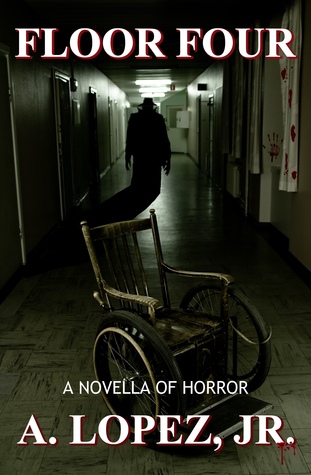
“Floor Four” by A. Lopez Jr.

‘A loud bang was heard from above, scaring the boys. They shined their lights up the stairwell. The sounds of chains rattling on the floor stirred the dust above. Something or someone was up there. Doug, hiding his fear, took a couple of more steps up. Brandon and Kyle looked at him, their feet locked in place. They had no intention of going any further.’ The old, abandoned Saint Vincent Hospital is said to be haunted by the ghost of David Henry Coleman, the notorious serial killer, known as The Mangler. Coleman died on the fourth floor after being shot by police. For the three Jr. High boys, their curiosity gets the best of them as they explore the old hospital, despite ‘Old Man’ Jake’s warning. No one knew of Jake’s dark connection to the killer and the hospital. And now, on the anniversary of The Mangler’s death, a group of high school kids are planning a private party on the haunted fourth floor. Jake must keep everyone out and protect them from the true evil that lurks on Floor Four.

Friday, September 4, 2015

All Authors Friday Rewind!

Hello Readers, Writers and Precious Patrons!

Welcome to All Authors Friday Rewind!


Today we bring you a Throwback of the very first Coffee Time Interview on All Authors Magazine.

Read the Full Issue Here


Y's Coffee Talk:
An Interview with
Mariah DeLa Croix

Recently, I had the privilege of sitting to an interview with Author Mariah DeLa Croix. I'd like to invite you as a guest in this edition of Coffee Talk.


Y Correa: I’d like to ask you what you’ve learned about something…

Mariah de la Croix: Go right ahead.

Y: Is your book, Restless in Peace, independently or traditionally published?

Mariah: Thank you for asking, Y. My book is traditionally published through an independent publisher. What that means is that Llewellyn is their own company, independent of other big New York type publishers. They’re awesome to work with, by the way, and human—sometimes making human mistakes, as we all do—but someone is usually always there to help you with an issue. Several editors there have been very helpful to me on a number of things which arose that I wasn’t quite sure how to professionally handle.

Y: That’s exactly what I wanted to talk to you about. Were you ever instructed on how to handle a bad review? If so, could you share with us what you were told?

Mariah: Oh, my goodness! Yes! I was very blessed to have not only my editors, both Amy Glaser and Rosemary Wallner, give me advice, but also my dear publicist, Liz Donatelli. They were remarkably helpful and calming for me in that arena. They’ve all been in the business much longer than I. I knew to ask someone before just responding to negative things—whether a bad review or angry article full of lies and twisted information or even someone spreading vicious rumors via social media with just enough truth to make their drama believable. I asked many things, those ladies listened patiently, and then advised me well.
They are the pros, while I’m just a newbie to this writing stuff. Their best advice was to ignore negativity at ALL costs.
I’ve gotten my share of bad reviews since Restless in Peace hit the shelves last September—and even before that from some who received ARC copies.
Some were just critical along with being informative. A few others took personal jabs. My initial feeling was to respond in some way. People on social media constantly tell each other to stand up for themselves, but something told me to think otherwise and be the bigger person. 
I went with that, yet still needed some validation that I was handling things properly.
I spoke with the pros that have been through so very much with other authors. The reasoning for this was that the reviewer couldn’t be seen as being the one in control, when really doing nothing more than baiting me and trying to get an inappropriate reaction out of me.  Admittedly, most won’t do this or even have it on their agenda, but some do and it really is best to just not respond.
Then, too, I was reminded of the old idiom of any publicity being good publicity, meaning someone somewhere is talking about you and making others aware of you.  People who become aware of you can buy your book or pick it up at a library and then make up their own minds—people have the ability to think for themselves and are often moved to read things for themselves when a negative review, blog, or article is written about a person or their work.  So, in a way, we can thank the negative critics greatly for their support, even though their words can cut into our souls at times.
When a person responds to negative criticism in a knee-jerk type of way, with themselves being negative or worse—scathing—one has just proven that they either aren’t ready to be out there to the public or they are too stuck on themselves to realize that all people are different and all people are entitled to their own opinions.  They oftentimes have had no one critically honest around them and have been misled into thinking their work is the next great American novel.  It may be fabulous in some people’s opinion, but in others it isn’t and they really just have to take that with a grain of salt and move on.  Even Margaret Mitchell’s Gone With the Wind and Harper Lee’s To Kill a Mockingbird have had bad reviews somewhere along the line.  That’s life!!
So, I’ve never argued with a critic or reviewer and don’t plan to. That behavior isn’t professional and, though gratifying for a moment, can cause an author to sometimes lose face with their readers and possibly burn some bridges they need later on. Critics and reviewers may read what was publicly said by the author and then decide to not get involved with their next work—who wants to be publicly chastised for just having an opinion. Though the author may feel humiliated, offended, or hurt, he or she has to learn to take the good with the bad and appreciate the fact that someone took their time to read their work, or even tried to if they couldn’t get all the way through it for some reason.
Though the author may feel humiliated, offended, or hurt, he or she has to learn to take the good with the bad and appreciate the fact that someone even took their time to read it, or even tried to if they, for some reason, couldn’t get all the way through it.


Y: How do you think another author should personally deal with negative criticism, or better yet, can you share with us how you’ve dealt with it?

Mariah: Sure! Negative criticism must just be accepted and taken with the good and positive stuff that brings happy tears to our eyes. I see it as there needing to be balance in the Universe and in all facets of our lives. If we don’t have some bad, we cannot fully appreciate the good. That’s how I now view this subject.
I also saw a wonderful post by James Van Praagh where he wrote, “What other people think of you is none of your business.” I then saw him on a television program and he uttered those same words. Whether he initially said this great quote or not isn’t important right now, but it still rings through my head, with care, when I read something about me or my work that isn’t kind; I may make a cross-stitch sampler of that quote and hang it on my wall!
I used to get fired up and desperately want to do or say something—after all, that’s what people tell you to do on social media. But, guess what? People on social media are not always correct. For someone who is in the public eye, as I am or any author is (even though that optical field is somewhat small for my part in it), we may be correct in speaking our minds in the privacy of our homes, but it’s not a good idea to spout off negatively in public when one has any level of celebrity.
And may I digress for a moment here and discuss celebrity?

Y: Most certainly.

Mariah: Okay, Thank you. “Celebrity”, is being known by those who don’t know you. In today’s society, with the advent of the internet, many people have celebrity and don’t realize it—or maybe they’ve just not taken the time to think about it. One can wave one’s flag, loud and proud, or complain to the world about how they feel, and for most folks this is just fine. But, for some others, this media openness can be life altering—sometimes in good ways, true, but oftentimes in bad. They can lose jobs, lose friends, or even find themselves stalked. Most know this and are willing to risk it, taking care and being savvy about what they do, while others blindly pooh-pooh it and just move on. 
Someone who wants people to enjoy their work—whether it’s a piece of art, a book, film, or whatever they’ve created—cannot afford to do this as they are in the public eye. While there are honest critics and reviewers out there, doing their job, there are also trolls who do nothing more than rip into things they either don’t understand, fear, or are jealous of. These folks are not true critics, but still they do have a right to voice their opinions. We, as artists, must not give in to the temptation of responding to those who troll. They try to bait us and create drama where none exists, thus giving themselves fifteen minutes of fame they don’t rightly deserve. So, if we do give into their game, we do nothing more than feed their twisted egos and give them attention they crave.
Knowing all of this, I take a lot of deep breaths and sit back, while sometimes wondering about the reviewer, critic, or trouble maker. I don’t think badly of them, but do try to put myself in their shoes. Perhaps they’ve had a bad day or perhaps something tragic happened recently in their lives and they just need to vent about someone, somewhere, somehow. I then think of good things that have been said, not allowing the bad to drag me down. In fact, I have sometimes wished beautifully good blessings to befall those who have taken the time out of their busy lives to comment on my work or me, whether good or bad. 

Y: How in the world can you do this when some things are hurtful and rude, even mean?

Mariah: Because I don’t hate anyone. I bear no ill will towards anyone. I don’t allow myself to be dragged into that abyss—I’ve been there before and it’s not a pretty place. So, I take Van Praagh’s advice and know that nothing said about me is really any of my business. I also add to this the important fact of if I’m meant to see it, somehow it will cross my path.
If something negative or hurtful does come to my attention, I don’t hold on to it any longer. I used to sit and worry about it, getting my gut all tied up in knots, but thanks to the ladies I mentioned earlier and friends who have talked me down, I’ve healed and grown stronger which enables me to prepare for the next onslaught. 
Once in a great while I will still discuss things with family or good friends, but it doesn’t go any farther than that and I get over it quickly to move on. I also know now that most comments aren’t personal, even though they used to feel as if they were. 
By doing this, not only in regards to critics and reviewers, but also regarding life itself, I find I grow every blessed day. Some folks don’t like this growth because I don’t haul them along with me—I’m not supposed to; they’re supposed to grow on their own and in their own ways. 
So, I get a lot of the “You’ve changed!” or “I don’t get you anymore,” types of things said to me, but that’s fine. 
When people tell us that we’ve changed, it’s because we stopped living OUR lives THEIR way. None of us can make every person we come in contact with happy, so why should we even try. When we grow and be who we are, without criticizing those who criticize us, we’re better for it, particularly when we’re in the public eye. We have to find inner peace and be confident in ourselves. When we do this, we are then happy. 
That happiness sends ripples of good out to others who are open to receive it, just like how ripples of water move outward when a stone is tossed into a pond.
In actuality, I now thank those who have given me bad reviews or criticism which bordered on being personal, along with those who have twisted my words or written outright lies about me. Without them I wouldn’t be as strong as I now am and wouldn’t have grown in the manner I was meant to. So, now I see those negative types as blessings in disguise—I don’t think they intended that result, but that’s what they got and I thank them.
All authors must, in my opinion, develop themselves into being stronger and finding the odd blessing from the negative and the bad. When they do they’ll be able to hold their heads up high, with honor and self-respect, and move forward to do even more great works, bringing even better good into their lives, along with the lives of their readers.


Y: Thank you so much for your thoughtful answers here, Mariah. I’d like to ask you one last question. What has been the most moving review or interview you’ve gotten that somehow inspired you?

Mariah: I have had so many wonderful and moving reviews of my book that I wouldn’t feel fair singling out just one. They’ve all moved me—some to happy tears and some to points of “Oh, My Goodness!” in various ways. I do sincerely thank all who have reviewed my book, along with those who have been kind enough to interview me.
I think, though, the most moving and meaningful reviews I’ve gotten so far would be those from people I’ve never met who have taken the time to talk to me personally. I’ve been told by some that, even though they are devout in their religion, my book gives them a feeling of being even MORE connected with their Higher Being. My writings have helped them know, within their hearts, that there is definitely something more waiting for them after they themselves pass on.
Others, who have felt that there is just nothing—you live, you die, and that’s it—have approached me with hope in their eyes, and sometimes tears, because the book affected them in such a way where they now feel they aren’t alone in the Universe. For some of them, too, there is now something more than just a mundane existence of life that ceases after death.
I never dreamt Restless in Peace would ever have that effect, but am truly grateful and humbled by these types of responses.

Y: Could you now share with us the title of your book and how we can get it?

Mariah: Yes, definitely, and I so appreciate this opportunity to chat with you and all of your readers, Y.
My book is entitled “Restless in Peace: A Psychic Mortician’s Encounters With Those Who Refuse to Rest”, published through Llewellyn Worldwide Publishing.
It can be purchased directly from Llewellyn and through many other locations, including Amazon and Barnes and Noble, available either in the paperback version or e-versions on Kindle and Nook.

Y: Mariah, thanks again for having taken the time to answer these questions.

Mariah: Thank you once again.